The Price You Set in Year One Is Still Killing You
Your pricing page was written by a version of you who had no customers, no payroll, and no idea what anything actually cost. That version picked a number. Probably in an evening.
Cash flow, runway, and financial planning for bootstrapped founders. Burn rate management, when to raise vs. bootstrap, reading your own financials.
Your pricing page was written by a version of you who had no customers, no payroll, and no idea what anything actually cost. That version picked a number. Probably in an evening.
It's 4:40 on a Tuesday. You're twenty minutes into a call with an investor you actually like, and she's been generous with her time. Then she asks it, casually, the way you'd ask about the weather.
You covered payroll from your own checking account once. Maybe twice. You told yourself you'd true it up later.
There's a version of "business is good" that should worry you more than "business is bad." It's the one where a single client is quietly carrying the company.
You made a budget. Somewhere around January, or the start of a new quarter, or maybe that afternoon when your accountant nudged you for the third time.
Every founder I know has had this conversation with themselves at least once. Usually in the bathroom. Sometimes in the car.
The numbers came out recently, and I've been chewing on them ever since. Median fundraising cycle in 2026: 23 months.
The calendar flips to the last week of June, and somewhere a founder feels it before they can name it. A low hum. The quiet awareness that the quarter is ending, the books need closing, and the person whose job that would be is, well, them.
The most expensive financial problems don't announce themselves. They look fine for months, then suddenly don't. A look at the four patterns that reliably mislead growth-stage founders, why they're so hard to spot, and how to build earlier warning systems before a crisis forces the question.
Every founder has the spreadsheet. You know the one. It has a tab nobody else could navigate, a formula that only works because of something you did back in March and never wrote down, and a row shaded yellow for a reason you've long since forgotten but are afraid to delete.
Brex acquired Pry Financials for $90 million and then wound it down. An honest comparison of the best Pry alternatives for founders who need live runway tracking and scenario modeling without a finance team.
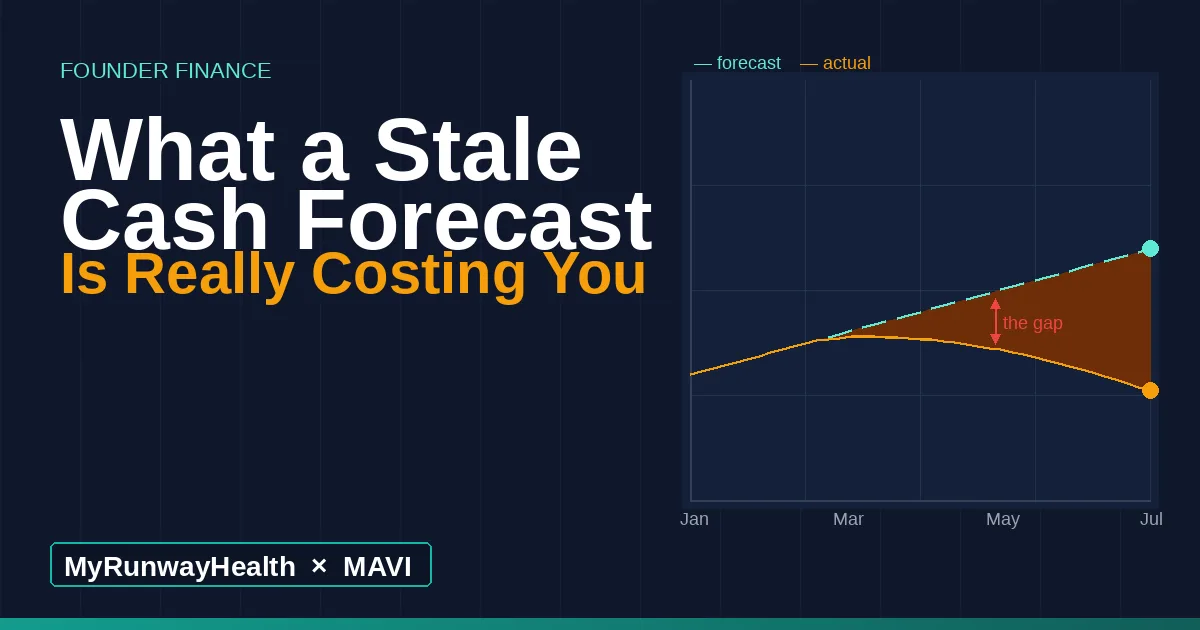
It's not just a data problem. It's a decision problem — and it compounds. Most founders discover their cash forecast was stale not because the numbers looked off, but because something went wrong that shouldn't have. Here's what it's really costing you.
Practical posts on runway, burn, and the boring-but-critical math of bootstrapping. Sent occasionally — never spammy.
Email delivery via Substack. Unsubscribe any time.